Showing posts with label art. Show all posts

Feb 6, 2014

AÑOS SETENTA ARTE EN ROMA

El otro día me encontraba en Roma y con la ocasión aproveché para ir a ver una de las exposiciones más destacadas que se encuentran en este momento en la Ciudad Eterna. Se trata de una muestra sobre las obras artísticas vanguardistas que han caracterizado los años setenta en esta esplendida localidad italiana y que el público podrá disfrutar hasta el 2 de marzo de 2014 en el Palacio de Las Exposiciones, en la Calle Nacional.

Aquí se pueden contemplar cerca de 200 trabajos pertenecientes a más de ochentas autores nacionales e internacionales que han caracterizado Roma en los años ‘70; unas obras constituidas, en su mayoría, por experimentos artísticos muy audaces que representan una sorprendente libertad de expresión y creación, resultado de la voluntad de comunicación y de diálogo de estos artistas. De hecho en aquel momento la ciudad era una muchedumbre de críticos y galerías de arte, asociaciones y espacios autónomos que jugaron un papel decisivo hacía la apertura y la promoción del arte contemporáneo italiano e internacional. Sobre todo entre 1976 y 1979 la capital italiana estaba dirigida por importantes personalidades artísticas como Giulio Carlo Argan, ante todos, junto a otras como Achille Bonito Oliva, Maurizio Calvesi, Bruno Cora y Alberto Boatto. Todos gran secuaces del arte conceptual que en aquel momento estaba en su auge, sobre todo a través de movimientos como la Transvanguardia, el Minimalismo, el Videoarte italiano y el Arte Povera de la llamada Escuela Romana. Una década caracterizada por una multitud de lenguajes y actitudes que esta exposición quiere atestiguar gracias también al importante trabajo de investigación histórica y de interpretación artística que los realizadores de la muestra han conseguido desarrollar. 
 Cada sala ha sido concebida siguiendo un tema artístico específico que reconduce a su vez a una particular disciplina con una palabra clave que actúa como soporte principal para la exposición de éstos proyectos de gran talento y realización. Así que, si tenéis ocasión de estar en Roma antes del 2 de marzo y el arte moderna os apasiona, esta es una oportunidad única. Podéis perderos en estos salones tan increíbles y sorprendentes no solo desde un punto de vista artístico sino también arquitectónico; un viaje inesperado y fantástico a través de unas obras que os llevará en otra época gracias también al lugar donde se presentan, un edificio de típico estilo neoclásico considerado entre los más emblemáticos de Roma cual es el Palacio de las Exposiciones.


Simona CulturalNet


70’s _Art In Rome

The other day, I was in Rome and took advantage of the chance to go see one of the most important exhibitions that are currently in the Eternal City. This is an example of the avant-garde artistic works that have characterized the seventies in this splendid Italian town and that the public can enjoy until March 2nd, 2014 at The Palace of Exhibitions at the National Street.


Here you can see about 200 works from over 80 national and international authors who characterized Rome in the '70s;  some works constituted mostly by very bold artistic experiments that represent a surprising freedom of expression and creation, the result of the will of communication and dialogue of these artists. In fact, at that time the city was a crowd of critics and art galleries, associations and autonomous spaces that were instrumental to this opening and promotion of contemporary Italian and international art. Especially between 1976 and 1979 the Italian capital was led by important artistic personalities such as Giulio Carlo Argan, above all, with others such as Achille Bonito Oliva, Maurizio Calvesi, Bruno Cora and Alberto Boatto. All great followers of conceptual art which by that time was booming, especially through movements like Transvanguardia, Minimalism, Italian Videoarte and Arte Povera called Roman School. A decade characterized by a multitude of languages ​​and attitudes that this exhibition wants to show through the important work of historical research and artistic interpretation of the workers who have managed to develop in this sample.
Each room is designed in a specific artistic theme that takes you to a particular discipline with a keyword which acts as the main support for these great and talented projects; so, if you have the chance to go to Rome before March 2nd, and you are passionate about modern art, this is a unique opportunity. You can lose yourself in these amazing and surprising rooms not only from an artistic point but also architectural; an unexpected and fantastic journey that will take you to another age also thanks to the place where these works are presented, a typical neoclassical building considered among the most iconic: of Rome: the Palace of Exhibitions.


Simona CulturalNet


Translation review: Elvira Salinas

Nov 15, 2013

LA MÁSCARA DE GUY FAWKES Y SUS SIGNIFICADOS

El pasado 5 de noviembre fue la famosa Bonfire night en Inglaterra, también celebrada en algunas de las antiguas colonias como Sudáfrica, Australia y Nueva Zelanda, entre otras. Fuegos artificiales y la máscara de Guy Fawkes es lo más típico de esta fiesta anual. Una máscara que ha dado mucho de sí, tanto que se creó una película ficticia y un movimiento social que es conocido en todo el mundo.
Es curioso cómo a la mayoría de los ingleses les gusta tanto esta fiesta. Existe una rima que dice: Recuerda, recuerda el cinco de noviembre pólvora, traición y complot. No vemos ninguna razón por la que la traición de la pólvora deba ser olvidada jamás.  
En 1605, trece jóvenes hombres planearon estallar el Parlamento inglés y asesinar al rey Jacobo I de Inglaterra, a su familia y al resto de la Cámara de los Lores. Alguien avisó al rey y pudieron arrestar a Guy Fawkes antes de que cometiese el crimen. Finalmente le ahorcaron por traición a la corona.
De esta manera, cada 5 de noviembre se celebra el fracaso del atentado con una serie de fuegos artificiales y una hoguera, que simboliza la quema del propio Fawkes. La famosa máscara ha sido usada para dar una cara al traidor del fallido atentado. Sin embargo, se hizo conocida mundialmente gracias a la novela y después película V de Vendetta. La cual se desarrolla en un futuro lejano en Inglaterra, donde un luchador por la libertad conocido como ‘V’ combate contra el terrorismo y una sociedad totalitaria.  

Y es que como ya he comentado, esta máscara ha dado mucho que hablar. Me refiero al movimiento social conocido mundialmente como ‘Anonymous’. Este grupo de individuos lucha contra la censura en internet y en favor de la transparencia política. Como símbolo de identidad utilizan la máscara de Guy Fawkes.
Sea como fuere, un simple símbolo ha dado cabida a varias historias. Para que sepáis cómo es este particular y especial día para los ingleses os dejo un vídeo en el que se puede observar esta curiosa tradición.


 Ruth Martín


THE GUY FAWKES’ MASK AND ITS MEANINGS
 
Bonfire Night takes place every fifth of November in England and some of the old colonies like South Africa, Australia and New Zealand, among others. Fireworks and the Guy Fawkes’ mask are the most common things at this annual party. This mask is famous in many senses: because of the ‘V’ for Vendetta film and a social movement ‘Anonymous’.

It’s interesting how the most of English people love this party. They’ve got a rhyme for this: Remember, remember the fifth of November, Gunpowder treason and plot. We see no reason why gunpowder treason should ever be forgot!
 

In 1605, thirteen young men planned to blow up the English Houses of Parliament and assassinate King James I, his family and the rest of the House of Lords. The King was warned about the plot and Guy Fawkes could be imprisoning before committing the crime. In the end, Fawkes was hung for crown treason.
 

So the attack failure is celebrated every fifth of November in England. Fireworks and a bonfire, as the Fawkes burnt, are the symbols for this party. The famous Fawkes’ mask has been using to face the traitor of this story. However, it’s famous globally because of the novel and then film ‘V’ for Vendetta. It takes place in a future England where a shadowy freedom fighter known only as "V" fights against his terrorist, totalitarian society.
 

As I said before, this mask is really famous. I’m talking about the social movement known globally as ‘Anonymous’. This group fights against the Internet censorship and be for political transparency. They use the Fawkes’ mask as their symbol.

No matter how, a simple symbol has created so many stories around it. I would like you to know how the fifth of November is so special for English people so attached is a video where you can see this interesting tradition.

Ruth Martín

Oct 24, 2013

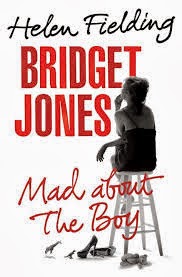
BRIDGET JONES VUELVE CON ‘LOCA POR EL CHICO’

Bridget Jones vuelve a nuestras vidas. El pasado 10 de octubre salió a la venta en Reino Unido la tercera novela de la saga de Helen Fielding, titulada Loca por el chico. Esta vez viene con sorpresas, Jones vuelve a estar soltera, tiene dos hijos y un amante.

En 1996 Fielding escribió El diario de Bridget Jones, que llegó a la gran pantalla en 2001 protagonizado por la actriz Renée Zellweger. Y en 2004 pudimos ver la secuela, que obtuvo una recaudación de unos 280 millones de dólares en todo el mundo, según indica Reuters.

La autora de la novela explica en una entrevista de la BBC por qué ha tardado tanto en continuar la saga: “Esperé hasta que la historia vino a mí… después la escribí en secreto sin decírselo a nadie porque de esta manera podía escribirla como lo hice con la primera”.

Bridget Jones en 2013. Nombre: Señora Darcy. Edad: 51, 35 si alguien pregunta. Estado civil: viuda. Familia: dos hijos Mabel y Billy. Vida amorosa: amante de 29 años, Roxster. De esta manera Fielding presenta su tercera de novela de esta famosa y exitosa saga.

“Este libro trata sobre cómo creemos que la vida se va a desarrollar y cómo realmente lo hace. De hecho, todo lo que sabemos es que la vida es dura”, así explica la autora por qué dio muerte a Mark Darcy, el marido de la protagonista.

Las fans de Bridget Jones tomaron las redes sociales para dar voz a su desconcierto sobre la noticia de la muerte de Mr Darcy.  Una de ellas preguntó en Twitter: “¿A qué diablos está jugando Fielding en próximo libro de Bridget Jones?”
La autora confirma que no hay planes recientes sobre la producción cinematográfica de la nueva novela. Por lo que de momento, debemos echar mano al libro o esperar hasta que salga en la gran pantalla. Sea como fuere, disfruten de esta alocada y nueva soltera de oro.
Ruth Martín


B   BRIDGET JONES RETURNS WITH ‘MAD ABOUT THE BOY’  

Bridget Jones has returned to our lives. The third instalment of Bridget Jones written by Helen Fielding, Mad about the boy, came out on the 10th October. The new novel comes with many surprises, Jones becomes single again, has got two children and a lover.  


Bridget Jones diary was written by Fielding in 1996, the film came out in 2001 starred by Renée Zellweger. And there was the sequel in 2004, which got about 280 millon dollars proceeds, according to Reuters.   

The author explains in a BBC interview why she has taken lot of time to continue the story: "I waited until a story came to me... then I wrote it secretly without telling anyone so I could just write it like I wrote the first one”.

This is way that Fielding presents her third instalment of this famous saga: Bridget Jones in 2013. Name: Mrs Darcy. Age: 51, but 35 if anyone asks. Marital status: widow. Family: two young children Mabel and Billy. Love life: Dating 29-year-old toyboy, Roxster.

“This book is more about how you feel life is expected to turn out and how it actually does. And this is, as we all know, a tough life”, the author explains that this is the reason why she killed off Mark Darcy, Bridget Jones' husband. 

Bridget Jones fans took to social networks to voice their horror at the news that author Helen Fielding has killed off Mark Darcy. One of them asked on Twitter: "What the hell is Helen Fielding playing at in the next Bridget Jones book!?”.

Helen confirmed that there weren't any plans so far for a movie with ‘Mad About The Boy’. So at the moment, we should read the new book or wait for a film. Anyway, enjoy this mad but golden single character.

Ruth Martín.


Sep 19, 2013

Cine de animación, la vida a través de los niños

Blancanieves, La Sirenita, El Rey León, Bambi o Aladín son algunas de las películas con las que han crecido muchos niños. Sus moralejas han formado parte de sus vidas y les han ayudado a crecer. Sin embargo, las películas de animación  no son solo para niños y prueba de ello son los récord de taquilla que tienen las recientes películas como ´Gru, mi villano favorito´. 

La idea de recrear el movimiento con una serie de dibujos llegó al cine en el siglo XVII aunque no destacó hasta 1902 con Viaje a la Luna  de Georges Méliès. Walt Disney tomó el relevo de la producción de las películas de animación con el archiconocido Mickey Mouse o Popeye entre muchas otras. Aunque la compañía estadounidense Pixar Animation Studios, comprada por Disney, es una de las mejores productoras especializadas en gráficos en 3D (http://www.carlospuech.com.es/2012/08/curiosidades-sobre-pixar.html). Sin duda, existen muchas productoras dedicadas a este mundo, como nos cuentan nuestros compañeros en Anatok 


La gran diferencia entre una película real y una de animación es su moraleja. Todos nos acordamos de Up, aquel pobre anciano que nos conmocionó a todos tras la muerte de su mujer y que un niño le cambió la vida. Las películas de animación son historias contadas por niños, nos hacen valorar lo que tenemos y no preocuparnos por lo superficial.

Muchas son las películas de dibujos que se me vienen a la mente con una sonrisa en la boca. Esa es la esencia, el ingrediente secreto, la picardía, la astucia y muchas veces niñerías de estas películas. Y es que por unos minutos te olvidas de la vida real y te sumerges en un mundo paralelo donde la risa está garantizada.


Ruth Martín.

Animation film, life through children 

Snowwhite, The Little Mermaid, Lion King, Bambi or Aladin are some of the films which some kids have grown up. Their moral of stories have made up part of their life and helped them to grow up. However, animation films are not only for children and as a proof the recent films as Despicable me have had lots of takings.

The idea of recreate a movement with cartoons turned up to the cinema in the 17 century, although it did not stand out until 1902 with A Trip to the Moon of Georges Méliès. Walt Disney relieved with the famous Mickey Mouse or Popeye. The North American Pixar Animation Studios, bought it by Disney, is one of the best production company specialised in 3D. Undoubtedly, there are a lot of production companies dedicated in this field, as our colleagues say in Anatok

The big different between a real film and an animated film is their moral of stories. Everyone remembers Up, an old man who jolted everybody with his wife death and a kid changed his life. The animated film are stories told by children, make us value what we have and not worry about superficial things.

Lots of animated films come to my mind with a smile. That is the essence, the secret ingredient, cunning, astuteness and many times childish of those films. So for a few minutes you forget real life and immerse yourself in a parallel world when a smile is insured.


Ruth Martín. 

Dec 19, 2012

Ballet Imperial Ruso

Cuando vas a ver un ballet la primera vez no sabes muy bien lo que puedes esperar; de acuerdo, esperas ver unos cuantos bailarines dando vueltas en el escenario al son de la música; pero lo que no puedes imaginar es la avalancha de emociones que te surgirán desde la primera nota ni la expresividad de los bailarines capaces de contarte una historia simplemente con sus movimientos.

Si eres capaz de abstraerte del resto del mundo, concentrarte en la historia y en la música que te envuelve saldrás del teatro preguntándote porque nunca quisiste ser bailarina (o bailarín) y formar parte de ese grupo maravilloso.

He tenido la suerte de ver compañías de ballet en Madrid, en Nueva York y en Londres, y sin duda la compañía que más me ha impresionado siempre ha sido la del Ballet Imperial Ruso. 

Los bailarines me ha parecido siempre un ejemplo de lo que se puede conseguir con el esfuerzo y el afán de superación y esta compañía es un claro ejemplo de ello. Son probablemente una de las mejores compañías de ballet de todo el mundo.

El Ballet Imperial Ruso fue creado en 1.994. Su director Artístico es uno de los más famosos bailarines de Rusia, Gediminas Tarandá, quien ha sabido darle esa mezcla de expresividad, emoción, fuerza y estética.

En esta ocasión nos trae a Madrid las obras de La bella durmiente, El Cascanueces y El lago de los cisnes, que serán representadas durante diciembre y enero. 

Si aún no habéis probado a deleitaos con alguna de las representaciones que en años anteriores hemos tenido el placer de disfrutar, probadlo estas Navidades, no hay mejor manera de acercarse a la danza; ¡seguro que no os decepciona!

Laura Pont.

 Imperial Russian Ballet


When you go to see a ballet for the first time you don't really know what to expect; of course you expect to see some dancers dancing to the beat of the music; but what you cannot imagine is the flood of emotions you experience from the first note, nor the expressiveness of the dancers capable of telling you a story, just through movement.

If you are able to detach yourself from the rest of the world and concentrate on the story and the music that surrounds you, I am sure you will leave the theatre asking yourself why you never wanted to be a dancer and be part of this wonderful group.

I have had the opportunity to see ballet companies in Madrid, New York and London, and without any doubt, the company that most impressed me has always been the Imperial Russian Ballet.


Dancers, for me, are an example of what can be achieved with effort and the desire to improve - this company is a clear example of this. They are probably one of the best ballet companies in the world.

The Imperial Russian Ballet was created in 1994. Its artistic director is one of the most famous dancers from Russia, Gediminas Tarandá, who gave it a unique mixture of expressiveness, emotion, strength and aesthetics.

They came arrived in Madrid to delight us with Sleeping Beauty, the Nutcracker, and Swan Lake, which will be shown throughout December and January.

If you have never seen any of the shows in previous years, go and see one this Christmas. There is no better way of experiencing dance; I am sure you will not be disappointed!.

Laura Pont.
Translation review: Yolanda Solo.

Nov 26, 2012

ANIMANDO A LO INANIMADO


¿Te has preguntado alguna vez cómo se realizan los dibujos animados? El proceso que sigue un boceto hasta la creación del personaje y creación de movimientos, colores hasta el momento en el que se les ‘da vida’ es una de las principales curiosidades de muchos, ya que este tipo de películas nos han invadido la vida desde que nacimos.

Hace apenas dos semanas, este tipo de dudas se resolvieron gracias a la Masterclass dada por Sergio Pablos y Fernando Moro ( ambos trabajadores de The Spa Studios, Disney) durante el 3 y el 4 de noviembre de 2012 en la Academia de Cine. Se trató de unas jornadas de dos días en las cuales intentaron, tanto resolver las dudas de aquellos asistentes curiosos como dar consejo a los cientos de profesionales que asistieron al evento.
Las diferentes charlas que ofrecieron fueron sumamente interesantes y arrojaron luz acerca de varios hechos acerca de la animación en el mundo Disney:

En primer lugar, el hecho de ‘animar’ algo tiene su rigen en la palabra ‘ánima’, es decir, alma, que sugiere que animando a un dibujo le estas aportando algo más que movimiento, le estas atribuyendo la capacidad de tener alma.
Por otro lado, el sistema de trabajo que se suele llevar en este tipo de empresas es que cada persona e ocupa de un personaje en concreto, con lo cual se especializa en el mismo y en sus tipos de movimientos.

Al igual que en la vida real, el lenguaje corporal supone el 80% de la comunicación que recibe el público del personaje, por lo que estos detalles se deben cuidar la máximo. De hecho, se aconseja a los creadores y animadores de personajes que, día a día, se fijen en su alrededor, en el movimiento de las personas, que vayan al zoo si tienen como personaje un animal.
Además, en muchas ocasiones te aconsejan no intentar llamar la atención con los movimientos si tu personaje es un secundario, aunque eso sí, nunca debes dejarlo quieto en ninguna situación, aunque no esté hablando.

Lo normal es que el director de las directrices a seguir y que los profesionales vayan dándole forma a estas ideas, aunque muchas veces no te da los detalles de todos, sino que tú mismo tienes que sugerir distintas formas de llevarla a cabo.
Y, finalmente, destacar una de las mayores ideas que se introdujeron, la de que un personaje de estas situaciones no tiene que sea real, ni tener una forma real, sino ser creativo, comprensible y exportable a otras culturas.

Adriana Alonso.

ANIMATING THE INANIMATE


Have you ever wondered how are cartoons made? The process begins with a rough sketch and ends with the creation of a character, their movements and colours until they take on a life of their own. This is a process which fascinates so many of us because these kind of films have invaded our life since we were toddlers.
A couple of weeks ago, those doubts were solved thanks to the Masterclass given by Sergio Pablos y Fernando Moro (both employees of The SpaStudios, Disney) on the 3rd and 4th of November, 2012 at the cinema academy. It was a two-day workshop where they tried to answer the questions from the curious people and professional audience.

The different talks offered by these two professionals were very interesting and throw some light on the animation process in the world of Disney.
Firstly, the world animation has its origin in the word soul, which suggests that when someone is animating a cartoon they are giving it more than movement, they are giving it a soul.

On the other hand, the way the work is organised in this type of company is that each professional animates one single character so they can be specialize in this character, and perfect their movements.
Same as happens in real life, body language represents 80% of the communication the public receives from the character, so the professional has to be meticulous with these details. In fact, the animators are told to notice everything around them, how people move, and if they have to create a character which is an animal, they are advised to go to the zoo.

Furthermore, they are advised not to try to attract attention with flamboyant movements if their character is not the main one, though the character should never be still, even if they are not talking.
Normally, the director gives the guidelines to follow and the professionals give it shape, even though they are not given all the details, and have to make suggestions how to complete it.

And, finally, to highlight that one of the main ideas that was introduced was that a character doesn’t have to be realistic, it has to be creative, understandable and be exportable to other cultures.
Adriana Alonso.

Translation review: Yolanda Solo.

Sep 7, 2012

Fotografía y su inspiración: de la Nacional Gallery de Londres a España

Desde la fotografía del siglo XVIII hasta la actual existen nexos con el noble y
antiguo arte de la pintura que no deben ser ignorados.

Y es que la Nacional Gallery de Londres prepara una nueva exposición, “Seduced by art: Photography past and present”, que se inaugurará el 31 de octubre, y que en febrero de 2013 ya estará en casa. En esas fechas la exposición será trasladada al CaixaForum de Barcelona, y podremos visitarla
en Madrid ya en junio.

Lo que nos quiere mostrar tal exposición es la inspiración que desde sus inicios la pintura ha ofrecido a la fotografía. Un arte relativamente moderno que no fue valorado en sus inicios, ya que al compararlo con el laborioso trabajo que impone el dibujo parecía carecer de valor artístico.

Podemos captar la viva relación entre la pintura y la fotografía en simples detalles, como la composición de las escenas o las posturas de los modelos, la luz, los paisajes…

El recorrido por esa influencia comienza con la observación de las imágenes sensuales y de aura religiosa tomadas en el siglo XIX por la inglesa Julia Margaret Cameron, de la cual cabe destacar su obra en lo referente a los retratos, y las tomadas por Helen Chadwick un siglo más tarde, destacadas por un ligero toque surrealista, en algunos casos, y por su característico juego de llamativos colores.

Posteriormente la exposición nos llevará a conocer las conexiones que existen entre la pintura de Thomas Gainsborough y la fotografía actual de Martin Parr y Tina Barley.

A parte de mostrarnos estas y muchas más obras, en esta exposición tendremos más sorpresas, como por ejemplo la que nos brinda la artista Maisie Broadhead, que se vale de la tecnología, pero en este caso de un vídeo realizado especialmente para la exposición, en el que recrea el retrato de Lady Eastlake, una dama victoriana.

No voy a entrar en detalles, porque quiero que seáis vosotros mismos quien lo veáis. Os sorprenderéis. Y recordad que el arte es tan multidisciplinar como la ciencia. Es como un árbol. No deben menospreciarse las múltiples conexiones existentes entre sus diversas ramas.


The Inspiration for Photography: From the National Gallery of London to Spain

From the photography of the 18th century until now there links with the noble and ancient art of  painting which cannot be ignored.

It is that National Gallery of London  that is preparing a new exhibition, “Seduced by art: Photography past and present.”  The exhibition will open on the  31st of October, and in February of 2013 will come to Spain, when  the exhibition is transferred to the CaixaForum in Barcelona, and Madrid in June.

The exhibition shows us the inspiration that painting has offered to photography.  A relatively modern art that was not appreciated at first, because compared to the laborious work that drawing requires,  it seemed to lack artistic value.

We can see the relationship between painting and photography in simple details, like the composition of the scenes, or the positions of the models, the light, the landscapes…

This influence begins by looking at the sensual and religious images taken in the 19th century by  Julia Margaret Cameron, best known for her work with portraits, and the photographs taken by Helen Chadwick a century later, emphasized by a light surrealistic touch, in some cases, and for there characteristic use of bright colors.

Later the exhibition highlights the connections that exist between the painting of Thomas Gainsborough and the present photography of Martin Parr and Tina Barley.

Apart from showing us these and many more works, in this exhibition we will find more surprises: for example,  artist Maisie Broadhead, who uses technology, but in this case it is a video filmed especially for the exhibition, which recreates the portrait of Lady Eastlake, a Victorian lady.

I am not going to go into further detail, because I want you to see it for yourself.  You will be surprised.  And remember that art is as multidisciplinary as science.  It is like a tree. The multiple existing connections between their diverse branches should not be valued any less.

Aug 27, 2012

CURIOSIDADES SOBRE PIXAR

Píxar, la archiconocida compañía dedicada a la creación de obras de animación lleva ya en nuestras vidas más de una década habiendo dejado a su paso títulos tan famosos –a día de hoy ya casi clásicos- como son Toy Story, Buscando a Nemo o Monstruos SA.

Y, como casi todas las cosas en este mundo, tiene sus curiosidades, que hacen de estas películas algo más que simples contenidos individualizados, ya que que los convierte en parte de un todo. Por ello, he aquí las curiosidades que los unen, que hacen de estas piezas algo único.

Bueno, en primer lugar cabe remarcar que en la película Toy Story, en la habitación de Andy, se pueden apreciar en diversos momentos varios libros y, si nos fijamos todavía más, podemos ver que los nombres de dichos tomos pertenecen a las películas de Pixar.

Siguiendo este hecho, podemos observar un elemento que siempre se repite en todas las películas de Píxar, y es una camioneta amarilla, que se parece bastante al Toyota Hilux. Dicho vehículo sale en todas las películas de la compañía.

Otro elemento unificado es el número 113, que aparece también en todas las películas, puesto que pertenece a California Institute of the Arts, utilizado por los estudiantes que crean la animación de los personajes.

Además, podemos encontrar la aparición de muchos de los personajes de Toy Story y Buscando a Nemo entre otros en todas las películas, se puede decir que son una especie de cameos en el mundo de la película animada.

Por otro lado, todos sabemos que cada cual tiene su propio amuleto de la suerte. Píxar lo tiene y lleva el nombre de John Ratzerberguen, encargado de dar la voz a personajes de animación, siempre sale en todas las películas de la empresa y a pesra de que su nombre no sea muy famoso es de los actores mejor pagados de Hollywood.

Y tras estas apreciaciones sólo me queda deciros que disfrutéis de eestas películas y que, gracias a esto, podáis apreciar los pequeños detalles que los creadores ponen en los films.

Pixar Curiosities


Píxar, one of the most famous companies in the world, works hard to create lots of animated movies and has been part of our lives for more than one decade. It has also developed some of the world’s  most well known animated films –almost classics nowadays- like Toy Story, Finding Nemo or Monsters SA.

And, like almost everything in this world, its films have their particular curiosities, which makes them more than individual projects, instead they are part of  something much bigger.   Below you will find some of Pixar´s curiosities.

In Toy story for example, if we take  a look at Andy’s room, we can see in some scenes that there are books inside the room.  And which are the names of the books? None other than the names of Pixar films.

Then  we can highlight the appearance of a yellow van – so similar to Toyota Hilux - in all the Pixar films.  

Another  unifying element is the number 113, which also appears in each and every Pixar film, because it is the corresponding number of the studio in the California Institute of Arts, used by the students who created the animated characters.

We can see the appearance of some of the main characters of films like Finding Nemo or Toy Story amongst others, in all the films, equivalent to a cameo appearance in the animation world.

Finally, we all have our own particular lucky charm and Píxar is no exception. Pixars charm has a name: John Ratzenberguen, who has worked as the voice of the characters of all of the Pixar films.  Although his name is not well known, he is one of the best paid actors in Hollywood.

I really hope you enjoy Píxar films and that you will now recognize the little details the filmmakers subtly include in the films.